
Is It OK to Use Artificial Grass in a Pool Area?
The short answer is a resounding YES, using artificial grass in a pool area is a great solution to many of problems with natural grass!
Artificial grass for pool areas provides a great way to bring a touch of luxury and style to any outdoor space. The artificial turf is soft underfoot, low maintenance, and looks natural. Artificial grass can also help protect your pool area from dirt and debris, as well as make it easier to clean up after use.
In fact, artificial grass has many advantages over natural grass for pool surroundings. However, you do need to choose the right type of artificial grass to avoid some of the pitfalls of using it in pool surroundings.
If you haven’t already done so, check out our artificial grass buying guide and also our installation guides.
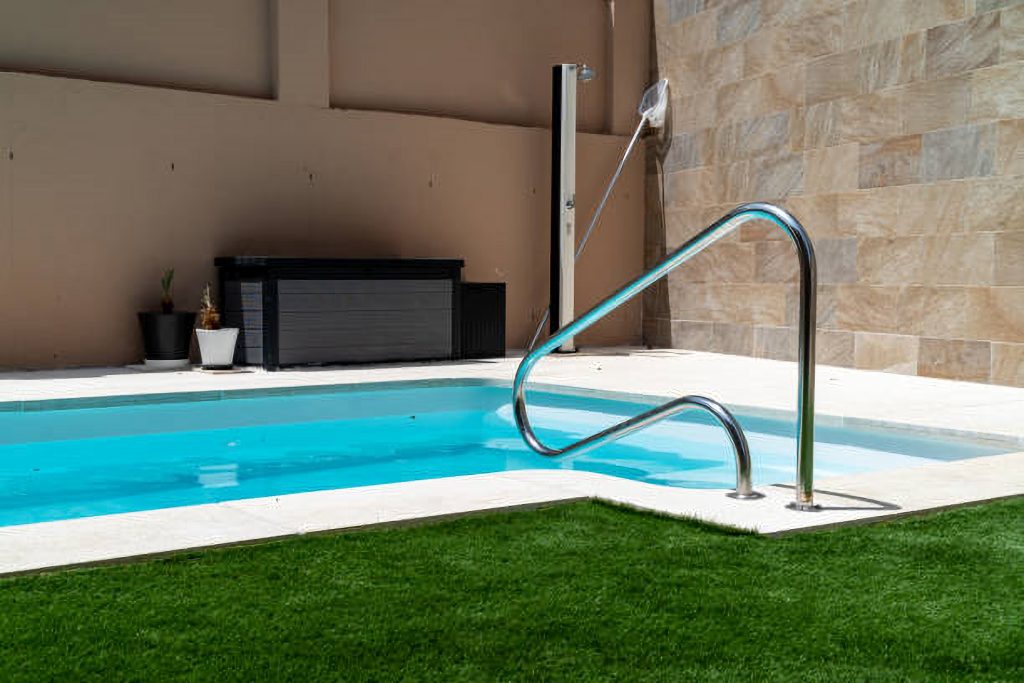
Advantages of Artificial Grass Over Natural Grass for Pool Surroundings
Artificial grass is a firm favorite with pool owners for many good reasons:
- Artificial grass doesn’t get muddy, meaning your pool and your home won’t suffer from muddy feet!
- Artificial grass requires no mowing and is low maintenance, making it ideal for busy pool owners.
- Artificial grass does not need to be watered or fertilized and will not attract insects or other pests.
- It is soft underfoot, providing a comfortable surface to walk on around the pool area.
- Artificial turf drains quickly, preventing standing water and puddles, which can be dangerous around a pool.
- Artificial grass is resistant to pool cleaning chemicals.
- Artificial grass is available in a variety of colors, allowing you to customize your pool area.
- It is resistant to wear and tear, so it will last for years without needing to be replaced.
- Artificial turf does not need to be reseeded or replaced, saving you time and money.
- It is also easy to clean up after use, with no need for raking or sweeping to keep the area tidy.
What’s the Right Type of Artificial Grass in a Pool Area?
Artificial grass is made up of a number of components:
- Pile: this is the actual blades of artificial grass, piles can be longer or shorter, and can be made out of a variety of materials
- Thatch: this is a layer of short, curly ‘dead’ grass that lends artificial grass some realism, and provides a nice cushioned feel underfoot.
- Backing: this is the material that the artificial grass blades are stitched or bonded to.
There’s more to it, however these are the important ones for now (if you want to know more, read our in-depth guide to buying and understanding artificial grass).
Pile Height
For pool surroundings, it’s safe to assume that most people will be walking on the artificial grass with bare feet. So, it’s important that the artificial grass feels good underfoot.
A longer pile height makes the artificial grass feel lush and springy. For pool surroundings, we recommend a pile height of 1 to 1.5 inches.
Grass Blade Material
Artificial grass blades are typically made out of the following materials. Each material has its own strengths and weaknesses.
- Polyethylene (PE) – this is the most realistic and hard wearing, but is prone to damage from the sun unless it has been manufactured with protection from UV.
- Polypropylene (PP) – the softest and usually the cheapest, but susceptible to wear and flattening.
- Nylon – the most hard-wearing and UV resistant, but also not very soft and known for causing ‘artificial grass burn’ on bare skin.
A good quality PE material with UV protection is a good choice, as is a blend of PP and Nylon to give some softness and also wear resistance.
Thatch
Again thinking about all those bare-foot walkers, we recommend artificial grass with a thicker thatch to add cushioning. This is especially important where the artificial grass is being laid directly over concrete or tiles.
Backing
When using artificial grass in a pool surrounding, drainage is critical. The last thing you want is puddles of water collecting as people get in and out of the pool.
How well the artificial grass drains is partly affected by how it is installed (more on this later). However, even a top-quality installation will have poor drainage if the incorrect backing material is selected.
Artificial grass backing can be made out of a variety of materials, but regardless of the material comes in two main types:
- Perforated: where the backing has holes punched in it at regular intervals to allow water to drain, and
- Permeable: where the backing material is a mesh that allows water to pass freely through.
Perforated backings are fine for most situations. However, for areas with a lot of rainfall, permeable backings are recommended to avoid problems with water pooling on top of the artificial grass.
For poolside installations where the artificial grass is constantly splashed with water, a permeable back is definitely the way to go.
Other Considerations when Installing Artificial Grass in a Pool Area
Feeling the Heat
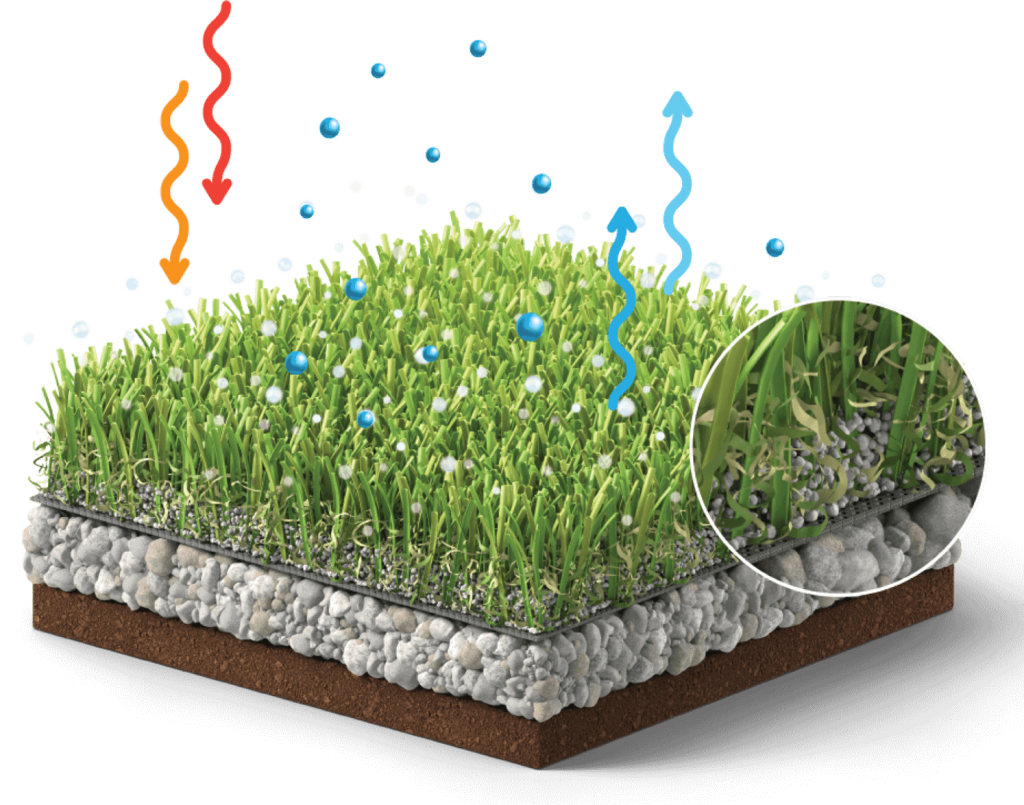
Artificial grass does have one downside: it can get hot in the sun. Some types of artificial grass have a special backing or infill that helps dissipate heat. Artificial grass that’s installed directly over concrete can heat up more than artificial grass installed over earth. If you find that the grass is getting too hot, you can quickly cool it down by spraying it with water from a hose.
If you find that this is a real problem after you have installed the artificial grass, you can sprinkle the artificial grass with a special infill material that wicks away heat by evaporating stored water. Read more in our guide to artificial grass infill materials.
Consider Drainage During Installation
Pool surroundings need to take careful consideration of drainage, regardless of whether the area will be surfaced with tiles, concrete, or artificial grass. Including drain grates with underground pipes to take away excess water will help avoid problems with water collecting in puddles around the pool. You can lay the artificial grass directly over the drain grates, and the water will pass through the backing and flow into the drain.
Take Care when Mixing Pool Chemicals
Unlike natural grass, artificial grass won’t suffer wear or discolor if it is splashed with chlorinated pool water. However, we advise pool owners to take care when mixing chemicals: undiluted pool chemicals are very strong, and can discolor or damage artificial grass.
Conclusion
Artificial grass is a great choice for pool surrounds. Unlike tiles or concrete, artificial grass is soft and comfortable on bare feet, won’t feel hot under the sun’s rays, and can be quickly cooled with a few sprays of water from a hose. With careful planning of installation details such as drainage and backing materials, artificial grass will make a great addition to any pool. Take care when mixing chemicals, however, as undiluted pool chemicals can cause discoloration or damage to artificial grass.
With the right artificial grass selection and installation methods, artificial grass can be a great choice for a beautiful and safe pool surrounding.