

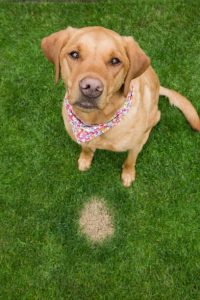
 No More Dead Patches
Artificial grass is a durable surface that can withstand heavy wear and tear from your dog, meaning it won’t easily become patchy or uneven. If you have dogs and natural grass then you probably already know that female dog urine kills grass. This leads to dead patches in natural grass lawns that can either spread or result in muddy areas when it rains.
These dead patches are very difficult to repair in natural grass. Re-seeding a dead patch caused by dog urine rarely works, as the dog’s urine seeps into the ground and kills the grass before it can sprout. Also your dog will most likely still prefer that spot to do their business, which will make the whole re-seeding exercise pointless.
Artificial grass, on the other hand, can be easily replaced when necessary (see our guide on replacing patches of artificial grass). This makes it the perfect solution for dog owners looking to avoid dead patches. If you choose artificial grass tiles, then the job of replacing one or more tiles is very straightforward.
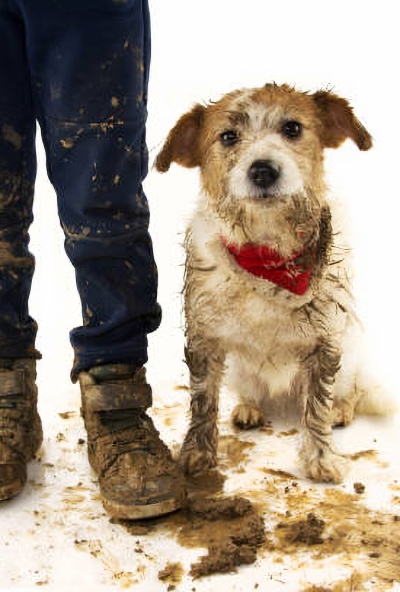 No More Mud
When it rains, natural grass can become either very muddy or waterlogged. This means that your dog will likely track mud and dirt into the house after their bathroom or play breaks. Artificial grass, on the other hand, absorbs little moisture and drains very quickly (if installed correctly). This means that when it rains, your artificial grass and your dogs will stay dry and free of mud.
How well your artificial grass will drain depends on the quality of the installation. So take care to hire a professional installer or read our installation guide. Whatever you do, don’t just lay artificial grass over the top of your existing grass, as this is likely to cause drainage issues (amongst other things). The other top tip for dog owners is to avoid using crumbled rubber as the substrate (the material that goes under the artififcal grass). This is because it can heat up quickly in the sun.
If you have dogs, poor drainage is likely to cause some bad smells, so it’s important to get it right.
Speaking of smells… read on to discover how to clean up after your dog.
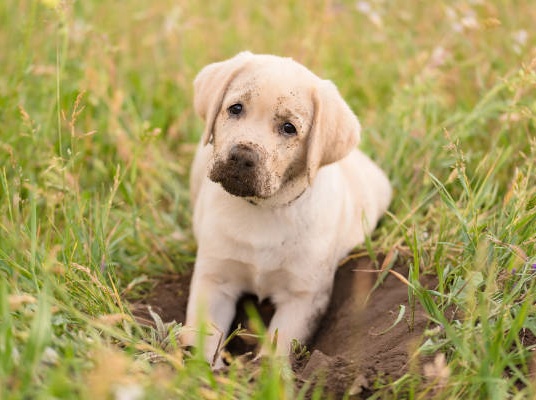 Deters Digging
Natural grass and the dirt beneath is very inviting to dogs wanting to dig, whereas artificial grass simply isn’t. If your pup is destroying the lawn, consider installing artificial grass and you may find that they lose interest in digging up the yard.
However, be advised that the more mischevious ones won’t be deterred!
Less Pest Control
Natural grass is a haven for bugs and ticks which can attach to your dog. This can cause your dog health problems, or the bugs can be brought into your home and onto your carpet, sofa or bed! On the other hand, artificial grass deters fleas and ticks, meaning your dog can play in the yard without you having to worry about them picking up any bugs.
With fewer ticks and fleas you will no longer have to use chemicals to manage the little critters that pooch brings into your home. Keeping your artificial grass clean and well-maintained is key to keep pests away. Read more in our guide to keeping your artificial grass looking and feeling its best.
The Verdict
For dog owners, artificial grass is a great choice with many advantages over natural grass. Not only does it look great, but it has many practical benefits: