
Avoid These Problems When Choosing Artificial Grass for a Children's Play Area
When choosing artificial grass for a children’s play area, there are several factors to consider.
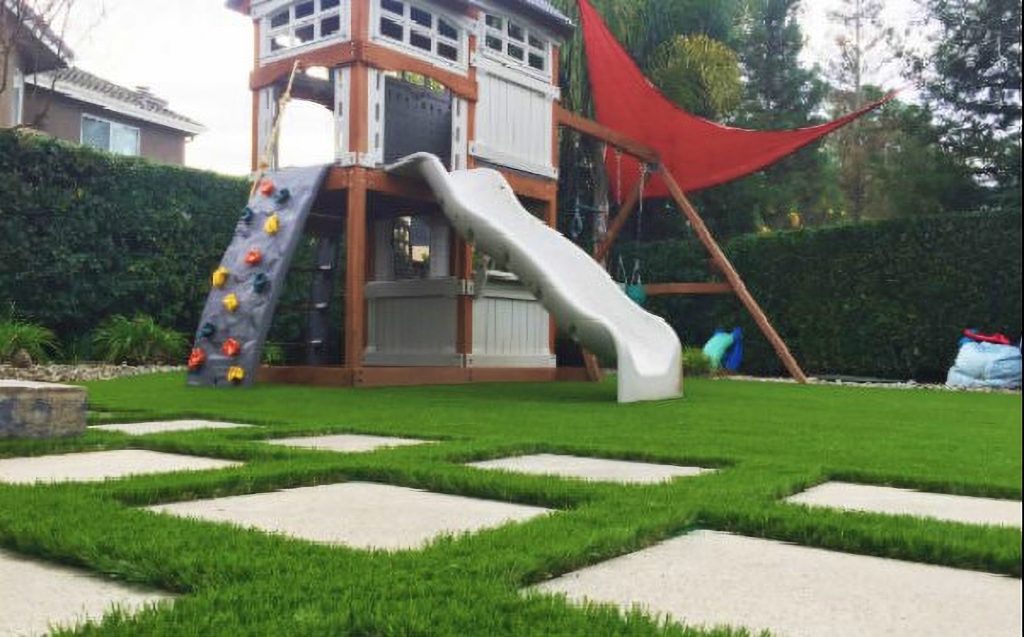
First, we need to define what we mean by ‘children’s play area’. We mean an area that is suitable for younger children, say toddlers to early teens. This area may include some play equipment like swings and jungle gyms. The play area is also likely to receive a sprinkling of toys and most likely some food and drink spills.
While of course the kids may play ball games in a play area, we want to be clear that we’re not talking about artificial grass for ball games like football, tennis and soccer. We’ve covered this in a separate article. Just pointing this out so as not to get confused!
Why Artificial Grass for a children’s play area?
If you visit playgrounds across the country, you will find that the majority of them have installed artificial grass. There are many good reasons why artificial grass is preferred over natural grass.
The first of these is wear. If you do find a playground with natural grass, take a look at the area underneath the swings, or at the foot of the slides. You will most likely see a patch of bare dirt. If it’s been raining, this will be a muddy puddle.
While Peppa Pig may love jumping in muddy puddles, having one in your own yard is a recipe for a LOT of clothes washing! The last thing you want is to try and keep your kids out of the play area for fear they will get all muddy.
The second good reason to go for artificial grass for a children’s play area is safety. Natural grass and the earth beneath can quickly get compacted into a firm surface. This is not great for a children’s play area where tumbles and falls are a normal part of play. Artificial grass for children’s play areas has a thick padded backing or underlay that provides a soft and forgiving surface.
The third reason is maintenance. While your play area may not be as big as those in public parks, even your small artificial grass play area will need mowing and weeding. Remember those bare patches we talked about earlier? You will need to try and find a way to address these: either by re-seeding or adding a patch of grown grass from somewhere else.
Artificial Grass Padding: A Soft Landing for Tumbles and Falls
Any parent will say that safety must be the primary consideration when it comes to creating play areas for young children.
While there are official standards for things like how far padding should extend from a swing or a slide, we’re assuming here that you’re looking at installing an artificial grass play area for children in your own yard, and not in a public place. If you’re curious (or can’t sleep), you can check out the official standards here.
When it comes to artificial grass padding, there are three parts of an installation that help to cushion falls. These are (from top to bottom):
- The artificial grass blades (the grass itself), then
- the backing that the artificial grass blades are attached to, and finally
- the substrate/underlay, or the material that is installed underneath the artificial grass.
Artificial Grass Blades
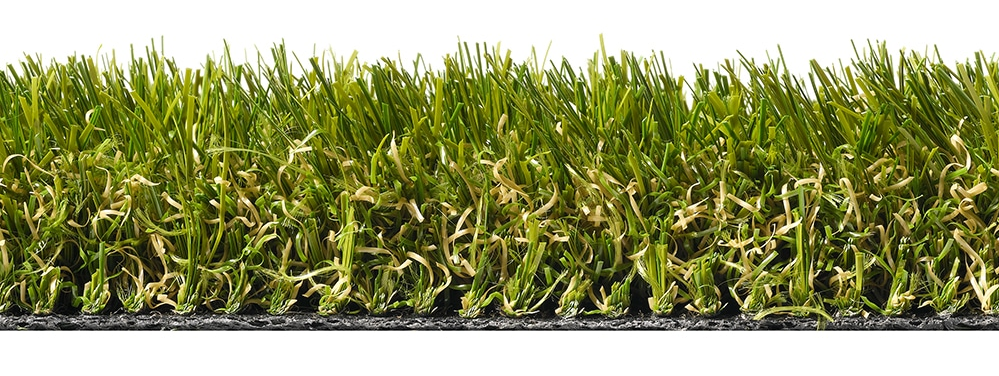
Longer blades (or pile height) help create padding, as does a thicker layer of thatch. Natural grass has the tall green blades that we usually see, but it also has a layer of smaller dying or growing blades. This layer provides some extra cushioning, which can be replicated in artificial grass.
Artificial grass with long blades and thicker thatch will have more of a cushioning effect. You can find out more in our artificial grass buying guide.
Artificial Grass Backing
Artificial grass backing is a thin woven fabric onto which the grass blades are stitched. This can be made out of various materials, most commonly PRT, RCX, latex or PU. The first two materials and recyclable and permeable, so offer good drainage. They also tend to be more expensive. Latex and PU will not allow water to pass, and therefore need holes punched in them to allow for drainage.
For play areas that have problems with standing water, a PRT or RCX backing will be needed. However, for most play areas, a PU backing is fine.
Substrate/Underlay
Public playgrounds must adhere to some strict standards for cushioning falls. Because of this, most of these playgrounds lay a shock pad underneath the artificial grass. While the shock pad does make a significant difference to the cushioning effect, it also has some downsides. These downsides include cost, and also potential drainage issues. Shock pads generally offer poor drainage, and so can create problems where play areas are prone to standing water.
For private artificial grass play areas, it’s up to you whether or not you need a shock pad. Choosing a tall pile height with a thick thatch may be enough padding for your project. You can find out more in our artificial grass buying guide.
If you think you need some additional padding, you could lay crumbled rubber as an underlay. This solution also comes with its own problems, as the rubber can store heat can get quite hot in the sun.
The Right Artificial Grass Material for Children’s Play Areas
The blades in artificial grass are called yarn. The yarn can be made out of a number of different materials, typically one or more of:
- Polyethylene (PE),
- Polypropylene (PP), and
- Nylon.
Polypropylene has the softest feel of the three materials. However, it is also the most prone to wear and is therefore not suitable for high-traffic areas such as an artificial grass children’s play area.
While nylon-based artificial grasses are the most wear-resistant, they should be avoided for children’s play areas as they are known to cause grass burns.
This leaves Polyethylene (PE) as the best choice for children’s play areas.
Conclusion
Artificial grass is a great choice for children’s play areas. However, take care when choosing the material that the grass is made of. Avoid nylon-based materials, and make sure you consider drainage issues when choosing your backing material. Opting for a tall pile height with a thick thatch will create the most padding. Lastly, you may want to consider adding a shock pad or crumbled rubber for extra cushioning, depending on your budget and needs. With the right materials and installation, your artificial grass play area can be a safe and fun environment for children to enjoy for years to come!