
What Is Artificial Grass Infill And Why Do I Need It?
If you’ve read some of our other articles you will have seen references to artificial grass infill. This article explains what it is, why you might want to use it, and the different types and uses of infill.
What is artificial grass infill?
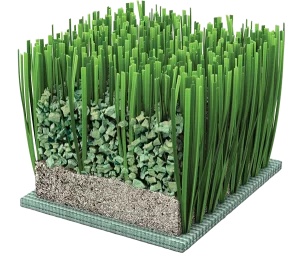
Infill is a granular material that is spread over the artificial grass after it is installed. Just to repeat that: it goes over the top of the artificial grass, and not underneath it. You can easily add some infill on top of existing artificial grass.
There are many different types of infill, each with their own specific uses (more on this later). However all types of infill have many advantages when used over artificial grass.
This first of these is that it helps make the make the blades of grass stand up. It does this by providing some physical support between the blades. If you have read some of our installation guides then you’ll know that when installing grass rolls, we recommend brushing the laid lawn to help the blades stand straight after being a little squashed when rolled up. Infill is applied after the brushing and provides a more permanent solution, and supports the blades through continuous use.
The second advantage is that infill can make the artificial grass feel more natural underfoot. If you’ve read our buying guide to artificial grass then you’ll know that a thicker thatch can help artificial grass feel more cushioned when you walk on it. Infill can have the same effect, in fact there are specific types of infill that are designed to add cushioning (more on these later).
The third advantage is that the infill adds weight to the top of the artificial grass, helping keep it in place and preventing rucking up.
Lastly, infill protects the backing material. It protects the backing from UV damage, and also from physical damage if the artificial grass is in a high traffic area.
Infill does have some disadvantages. The first is that it adds a little more time and cost to the project. This is why it’s important to read our guides to using artificial grass in different situations, as the benefits of infill in a specific application may not outweigh the additional cost and time.
The second disadvantage is that the infill can move around, get washed away or deplete over time. If you or your kids play sport on artificial grass then you may already have cleaned little rubber grains out of your washing machine filter… these are grains of infill from the track or field!
How to apply artificial grass infill
While you can just sprinkle infill over your artificial grass and brush it in with a broom, we’d recommend using a drop spreader. These are inexpensive to buy or rent, and make the job quick and easy while providing a very even coverage.
However before you go out and buy yourself a drop spreader, check what the manufacturer of the infill material has to say about how to apply the product. Most materials, including plain old dried sand, are suitable for application via a drop spreader.


Use a drop spreader like this one to apply infill to your artificial grass
Sand infill
The simplest and cheapest!
Before applying the sand, make sure that it is very dry. You can either buy kiln dried sand or dry it yourself by spreading it out in the sun. There are also specialist artifical grass infill sands that are colored green to provide a lush-looking finish.
Sand will do a good job of helping the blades stand upright, and making the artificial grass feel more natural underfoot.
Sand can retain moisture however, which can be a bad thing in damp climates as it can lead to mold. If you do live in a damp climate, then spending a little extra on some anti-fungal infill makes a lot of sense.
Sand can also retain other types of moisture… which can be a problem if you have pets. Again it may be worthwhile to spend a little extra on some infill that is specially designed to manage pet urine (such as BioFill).
Use green silica sand like the example above for a rich and lush-looking finish.
Artificial grass infill for pets
Well, it’s not for pets, it’s for artificial grass that has to cope being used as a bathroom by pets. Because this can be such a problem for pet owners, there are many pet-specific infills on the market.
BioFill is one of the most popular infills for pet owners, and it strikes a good balance between effectiveness and cost. BioFill works by absorbing the ammonia and odors from the urine, and then releasing this when it rains. The idea is that it will all rinse away. If you have read our guide to artificial grass and pets, then you will know that good drainage is critical!
Anti-fungal
Many specialist infills have anti-fungal properties. This is important if you live in a damp climate where the infill may be wet for days at a time. High quality infill materials are likely to have anti-fungal properties alongside other benefits (such as managing pet urine).
Cooling
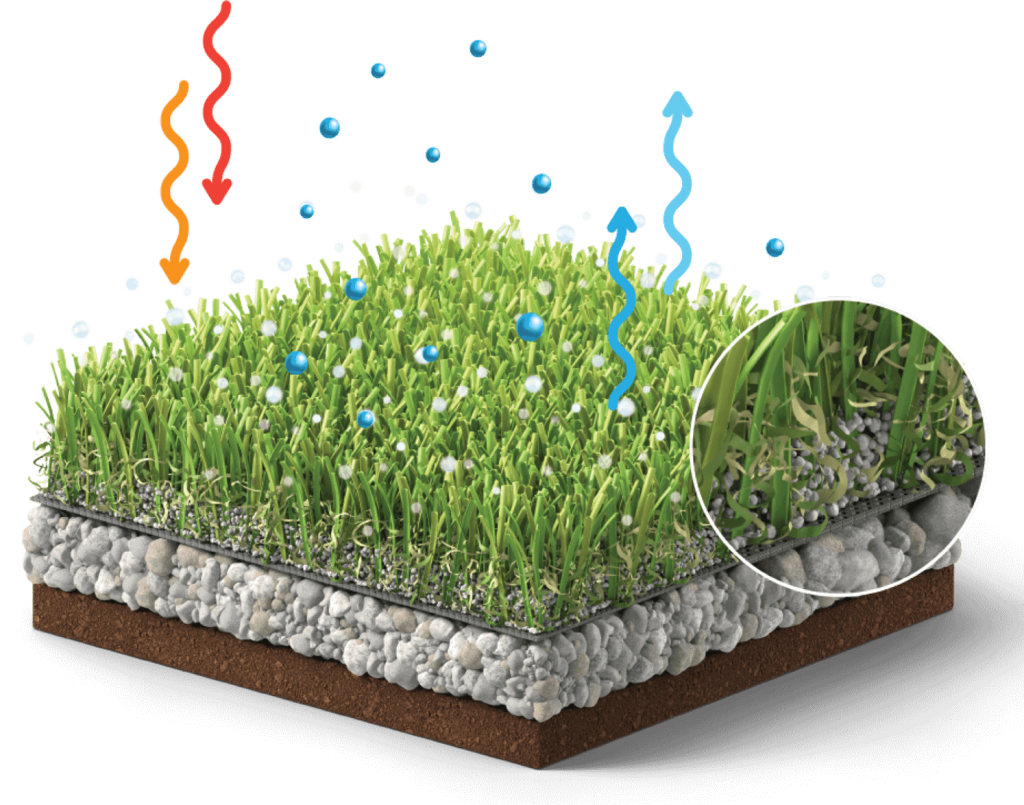
Some types of infill are truly ingenious! If you’ve read our guide to using artificial grass around pools you’ll know that artificial grass can get hot in the sun. This is especially the case where it is laid over concrete.
While you can quickly cool artificial grass down with a spray of water, some infills offer the ability to keep the artificial grass cool by absorbing some heat from the sun. The infill retains moisture, and sheds heat by using it to evaporate some of this water. This is the same way that your body uses sweat to cool down: the sweat takes away heat as it evaporates.
Shock-absorbing
The last property of infill material that we will cover is its ability to absorb shocks. This is typically needed on sports fields, gyms and children’s play areas.
There are other means of adding cushioning to artificial grass. If the grass has a thick thatch and long blades, then this can add significant cushioning. Also it is possible to add padding by installing a shock pad underneath the artificial grass, however the cost of a shock pad for a large area is likely to be prohibitive.
A third option is to use a springy infill material, such as crumbled rubber. This infill material is made by crumbing old car tires. It’s easily applied to large areas with a drop spreader, and can be easily replenished if needed. It’s also environmentally friendly.
The downside of this type of infill is that it can be toxic, and so is not suitable for use where young children play.
Cost versus benefit
We hope you found this article about infill useful. It can be a complex topic as the type if infill you may need will depend on the climate where the artificial grass is installed, and also what it will be used for.
You may find it useful to think of infill material as have specific properties, for example anti-fungal properties. Have a think about your application and what kind of infill properties you need.